MagaBox serves you wholeheartedly, we will continue to optimize our products, just for giving you the best product experience.
MagaBox
MagaBox serves you wholeheartedly, we will continue to optimize our products, just for giving you the best product experience.
MagaBox


2026 guide to IPTV Legal in the US. Explains copyright law, differences between verified and unverified services, user risks, safe practices, and hardware considerations. Highlights Magabox as one-time purchase / no monthly fee / OEM customizable device for safer long-term IPTV use
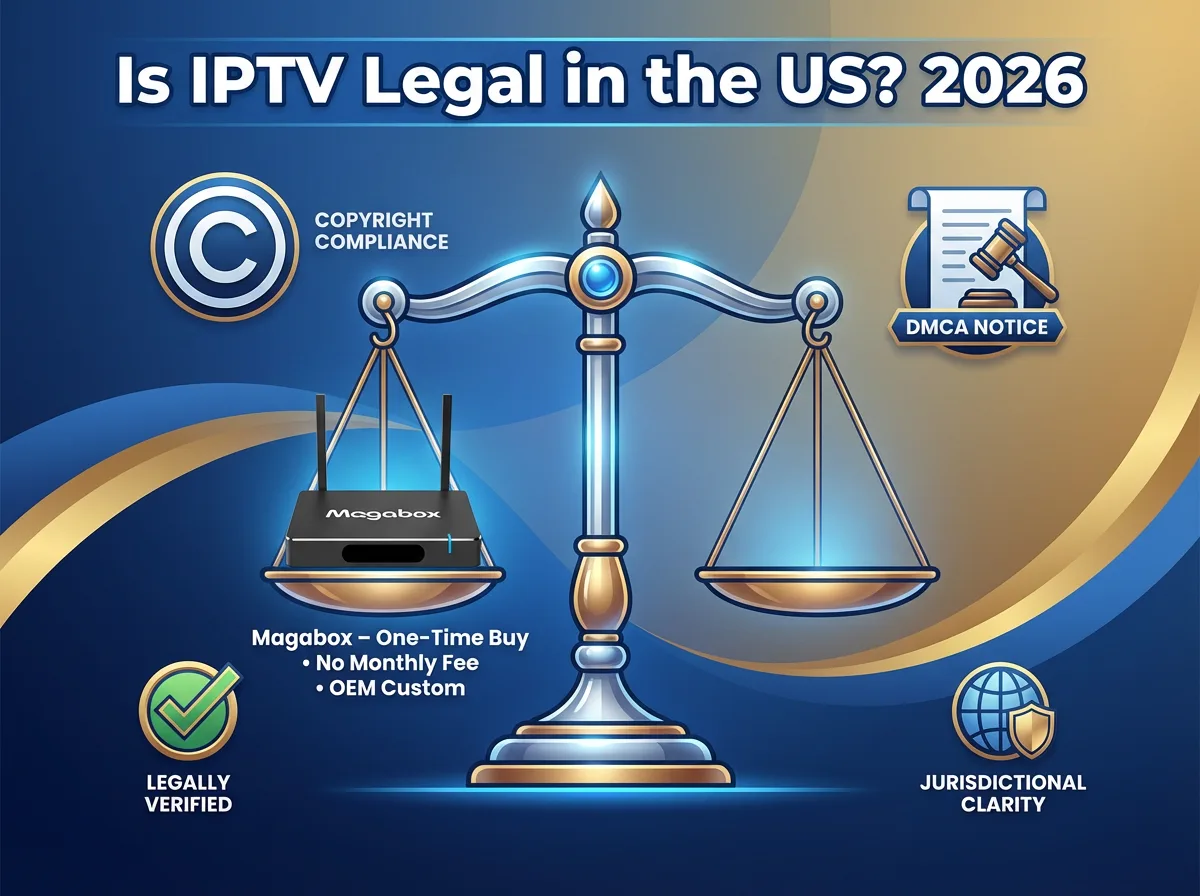
Wondering whether using IPTV Legal in the US in 2026? With so many options available and frequent news about enforcement actions, many people are asking the same important question: Is IPTV legal in the US, and what do you need to know to stay on the right side of the law while enjoying live TV and on-demand content?
IPTV itself — the technology of delivering television over the internet using IP protocols — is not illegal. The legality depends entirely on whether the content being streamed is properly licensed.
In the US, copyright law (Title 17 of the U.S. Code) protects movies, TV shows, live sports broadcasts, and other audiovisual works. Streaming or distributing copyrighted content without permission from the rights holder is illegal. This applies whether the service is a large verified platform or a small unverified IPTV provider.
Verified services such as YouTube TV, Hulu + Live TV, FuboTV, and Sling TV operate under licensing agreements with broadcasters and studios. They pay for the rights to retransmit channels and are generally considered legal.
Unverified IPTV services, which often offer thousands of channels at low prices, frequently distribute content without proper licenses. This makes both the provider and, in some cases, the end user potentially liable for copyright infringement.
The Digital Millennium Copyright Act (DMCA) is the primary tool used by copyright holders in the US. Rights owners can send takedown notices to hosting providers, payment processors, and domain registrars. In 2026, enforcement has become more aggressive, with increased cooperation between studios, sports leagues, and federal agencies.
Users who subscribe to obviously unlicensed services risk:

| Aspect | Verified / Legal Services | Unverified IPTV Services |
| Licensing | Proper agreements with broadcasters | Usually no licenses or unauthorized retransmission |
| Channel Sources | Official feeds from networks | Often captured from satellite or other sources |
| Legality for User | Generally legal | High risk of copyright infringement |
| Price | Higher ($70–$150/month) | Lower ($10–$50/month) |
| Reliability | High uptime, official support | Variable, frequent outages |
| Local Channels | Often included with proper authorization | Spotty or through virtual headends |
| Customer Support | Structured (phone, chat, email) | Usually chat or ticket only |
Most individual IPTV users who simply watch content face civil rather than criminal risk. Copyright holders typically target the service providers first. However, repeated and willful infringement can lead to civil lawsuits seeking damages.
In practice, the biggest risks for users are:
Some services operate in legal gray areas by claiming they only provide “links” or “access tools.” Courts have generally ruled that facilitating access to unlicensed streams can still constitute contributory infringement.
Using a VPN does not make illegal streaming legal. It may protect privacy but does not shield users from copyright liability.
For full legal protection, choose verified platforms:
These services pay for retransmission rights and offer local channels, DVR, and multi-device support.
If you choose an unverified provider:
Choosing the right device can improve both experience and security. Magabox is one of the few 2026 IPTV devices sold on a one-time purchase basis. After the initial cost, there is no monthly fee. It offers lifetime firmware updates and supports OEM customization for resellers or branded deployments. Using dedicated hardware like Magabox can help isolate IPTV activity from your main devices.
IPTV technology itself is legal, but the source of the content determines legality. Verified services operate within the law by securing proper licenses. Unverified services carry significant legal and practical risks for both providers and users.
For users who want a balance of features, reliability, and reduced long-term costs, Magabox offers a practical hardware solution: a one-time purchase with no monthly fee, lifetime firmware support, and OEM customization available.
Are you currently using verified streaming services, unverified IPTV, or a hybrid setup? What concerns you most about legality and safety when choosing IPTV in 2026?